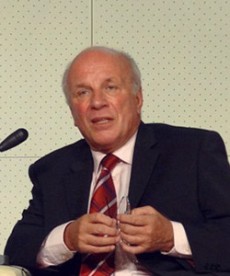
Greg Dyke will take over as independent chairman of the Football Association (FA) on 13 July, replacing the outgoing David Bernstein. The former BBC director general – who resigned from that organisation in the wake of the Hutton Inquiry – received the unanimous backing of the FA Board, but faces the prospect of having to rattle some cages once he is in position.
The much-maligned body has received copious criticism in recent years, particularly in light of the England team’s disappointing performance since 1996. The FA has been blamed for the bungled appointment of Steve McLaren, the controversial and expensive appointment of Fabio Capello and the general lack of high-quality youngsters coming through the squad’s ranks. In the past week, its disciplinary procedures have come under fire following the failure to retrospectively punish Wigan’s Callum McManaman for a ghastly horror tackle on Newcastle’s Massadio Haïdara – with Newcastle managing director Derek Llambias describing its disciplinary procedures as “not fit for purpose”.
However, Dyke has the required attributes to make an impact, given his no-nonsense reputation – a quality that swung to the fore in 2002 when he famously rallied the red-tape-friendly BBC with the slogan “cut the crap, make it happen”. Almost prophetically, that curt mission statement was reproduced on a host of yellow cards.
Dyke’s chutzpah could prove hugely influential in the notoriously slow-moving world of the Football Association, where decisions tend to take an age to be made. While the St George’s Centre of Excellence is now open, many pundits believe that getting to that point took a good 10 years longer than it should have.
Dyke also has credible relevant experience in sport – not just in terms of the BBC’s output, but as a non-executive board member of Manchester United between 1997 and 1999, and the same role at Brentford since 2006. This exposure to both ends of the pyramid should stand him in good stead to take on the Premier League’s power when necessary – and to consider the needs of smaller, but no less important, clubs in the lower divisions and at grassroots level.
The FA deserves credit for appointing someone who may rock the boat a little. With the multiple issues the game faces, he may be just the man to kick things into shape.